A Clear Resource for Buyers, Sellers, and Hummel Consignment Clients

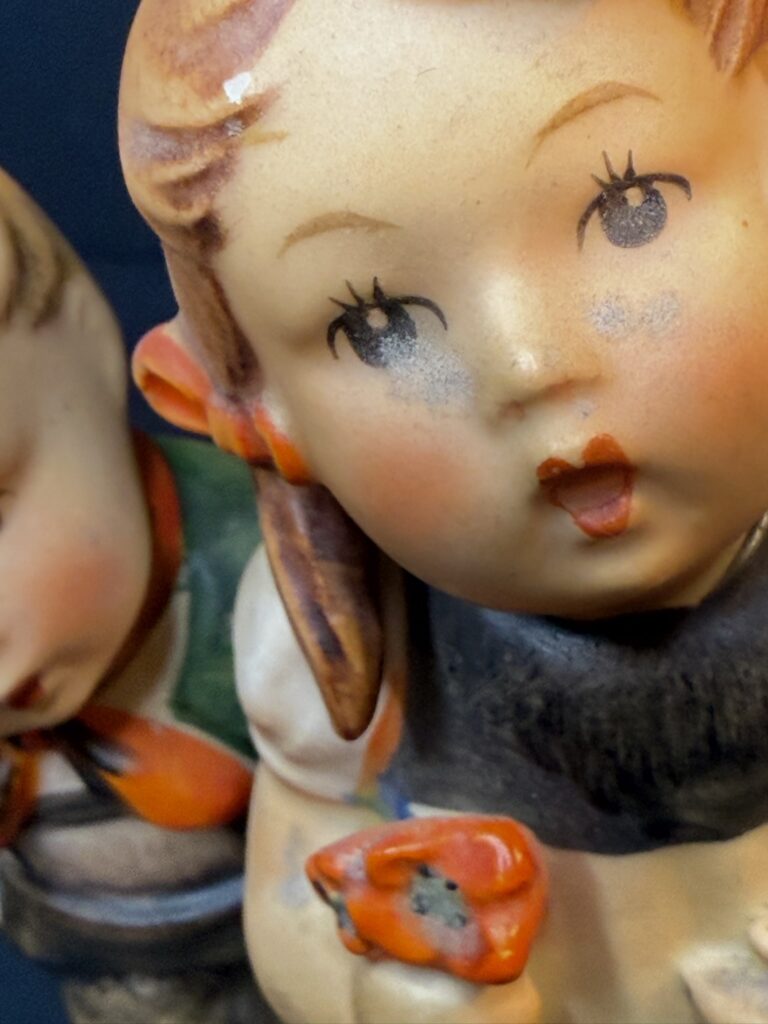
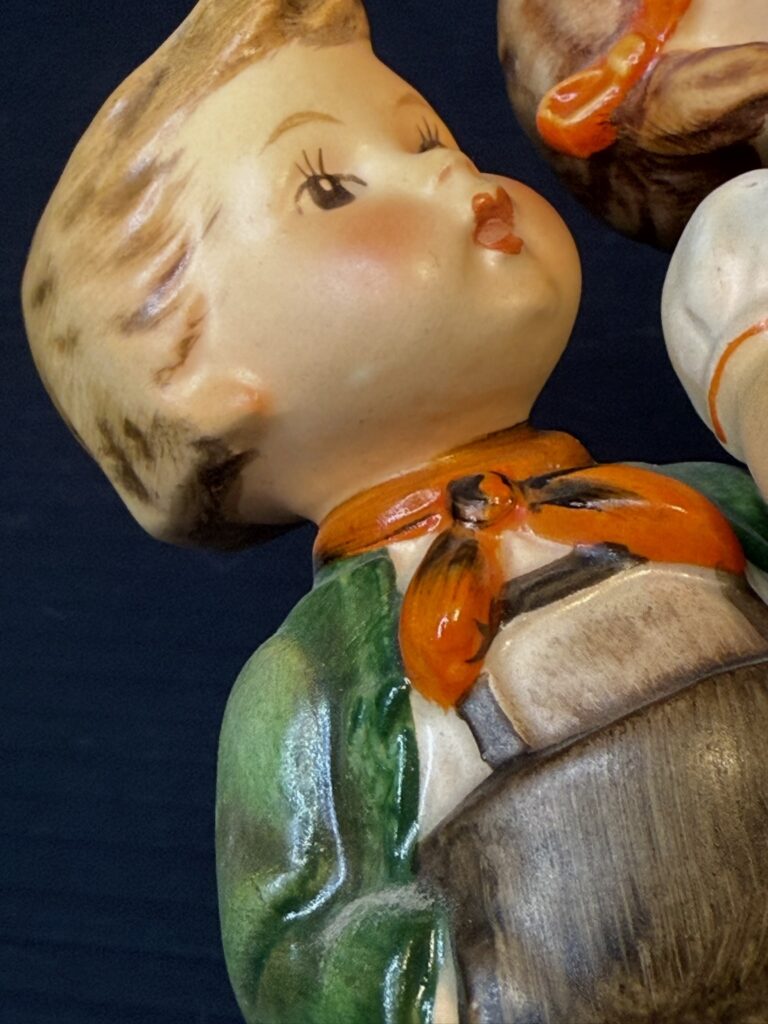

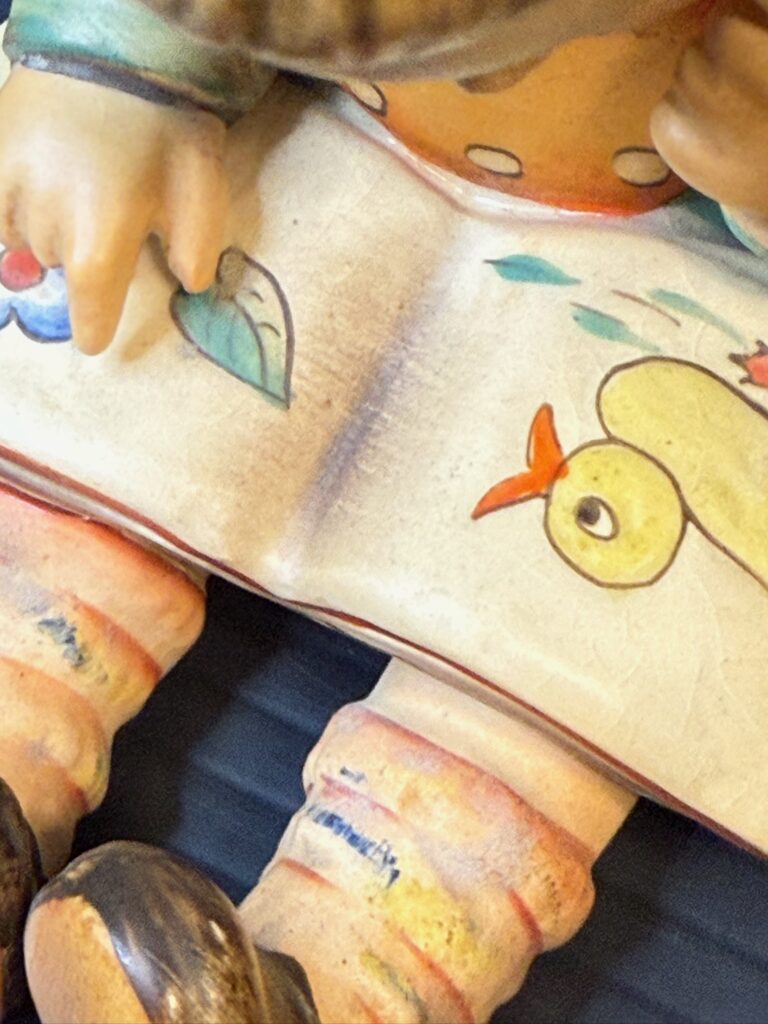
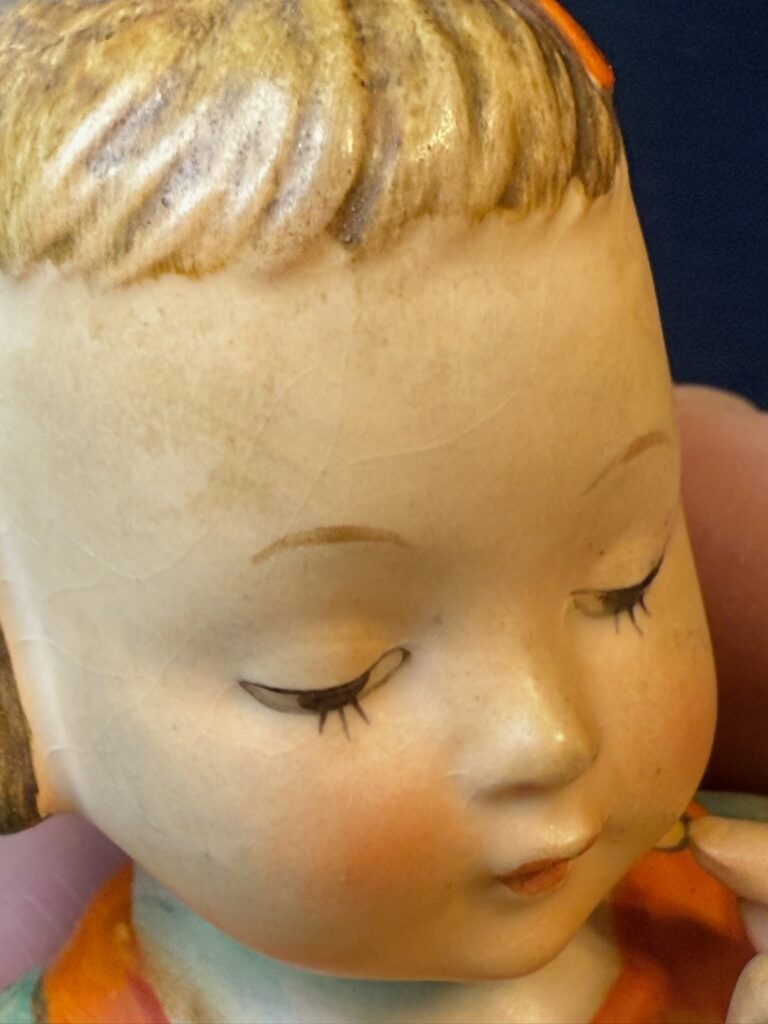
It is a buyer’s market for Hummels right now, which means collectors have the luxury of choice. When someone can compare several examples of the same figurine, they will almost always choose the one with the cleanest glaze, the most intact details, the brightest paint, and no damage at all.
Many people assume that a piece being old gives it permission to be flawed. While true rarity can allow for some imperfections, many older pieces are not rare in today’s market. Even early trademark pieces from TMK 1 and TMK 2 appear regularly as estates are settled and collections change hands.
A genuinely scarce piece with no comparable examples may still hold value even with age related wear, but that situation is uncommon. For most figurines, when comparable pieces are available, condition is the factor that drives value.
This guide explains the most common condition issues found in Hummels and other porcelain figurines. It will help you understand why these flaws matter to collectors and how to evaluate your pieces before selling Hummels in bulk, selling them through retail channels, or sending them to auction or for consignment.
Common Hummel Imperfections to Look For
Many people believe their figurines are in perfect condition, yet the photos shown here are all examples of pieces I received from sellers who described them that way. High quality lighting and close photography reveal issues that are easy to miss at home. Below are some of the most common flaws I see when evaluating Hummels:
Breaks
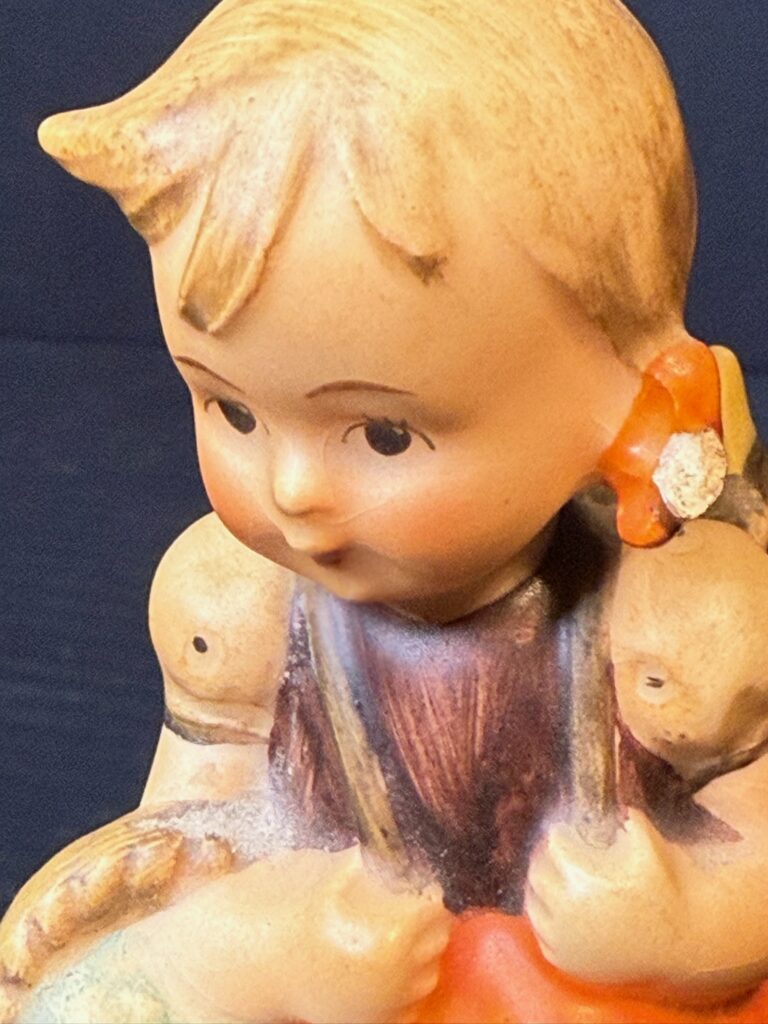
Certain areas are especially vulnerable to damage. These include braids, scarves, bows, flowers, wings, animal ears and tails, and any small accessory. Items such as ski poles, umbrellas, and flagpoles are often lost or broken because they extend away from the figurine and catch on storage materials.
Chips

A chip occurs when a small portion of porcelain breaks or flakes away. Chips can appear anywhere but they are most common along the base, on clothing edges, on fingers and hands, on bows, on flowers, on hats, on instrument tips, and on animal ears.
Even a tiny chip reduces value because it interrupts the clean lines and crisp details collectors look for. High-quality photography makes chips very noticeable.
Cracks
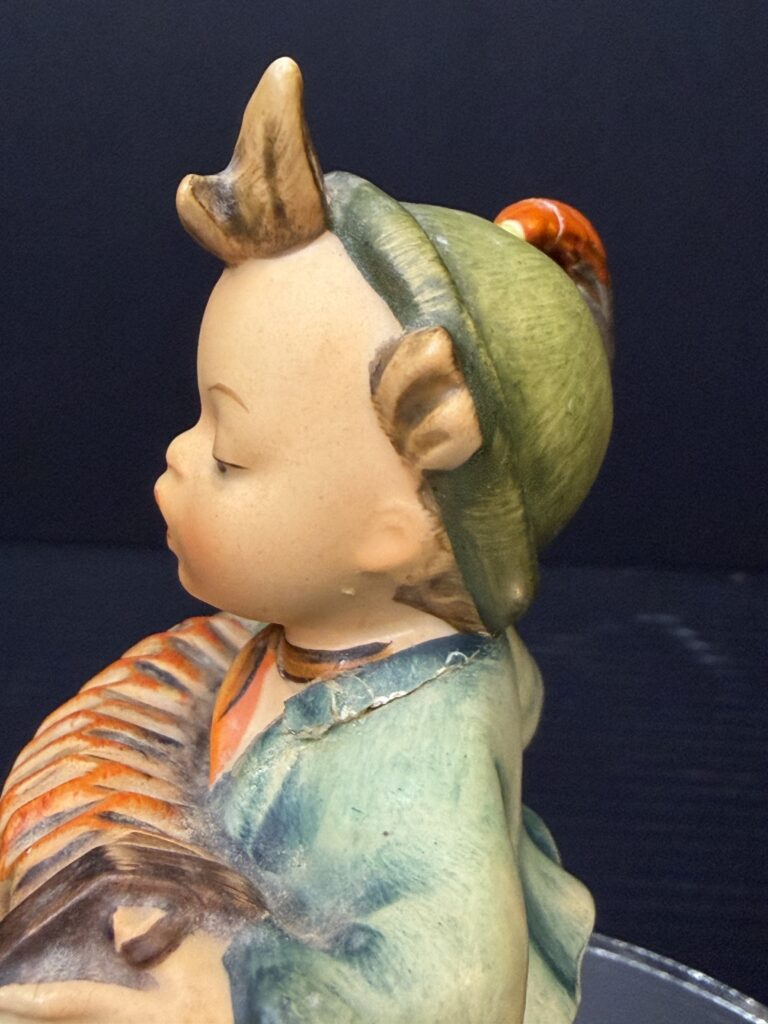
Cracks can be thin hairline lines or more noticeable structural breaks. They often appear across the base, around the neck or arms, along folds of clothing, across the back, or near impact points. Bright light frequently reveals cracks that are not visible in softer indoor lighting.
Cracks almost always make a figurine unsuitable for collector resale because they affect both appearance and integrity.
Crazing
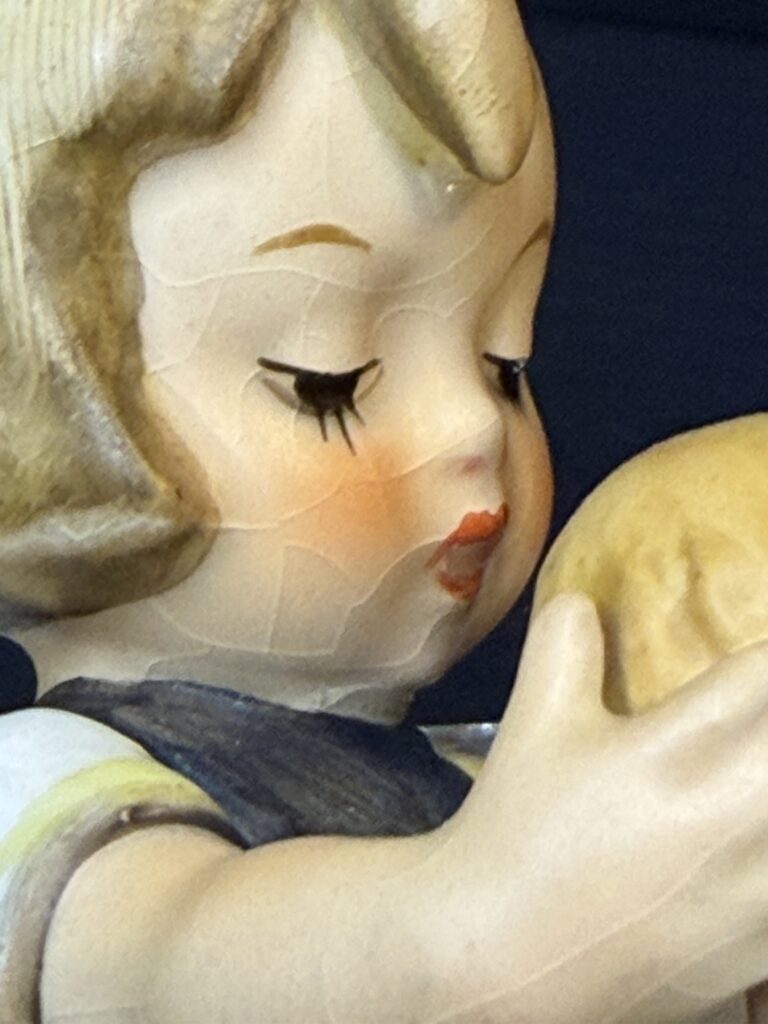
Crazing is a network of tiny lines in the glaze. It can be faint and barely visible or dark and heavy. It may appear lightly on the base, in small patches, across clothing, or over an entire surface.
Light crazing on the base may be acceptable for older pieces. Any crazing on the face is considered a major flaw. In rare situations where a figurine is truly scarce, some crazing may be tolerated, but these cases are extremely uncommon.
Paint Wear, Color Loss, Staining, and Discoloration
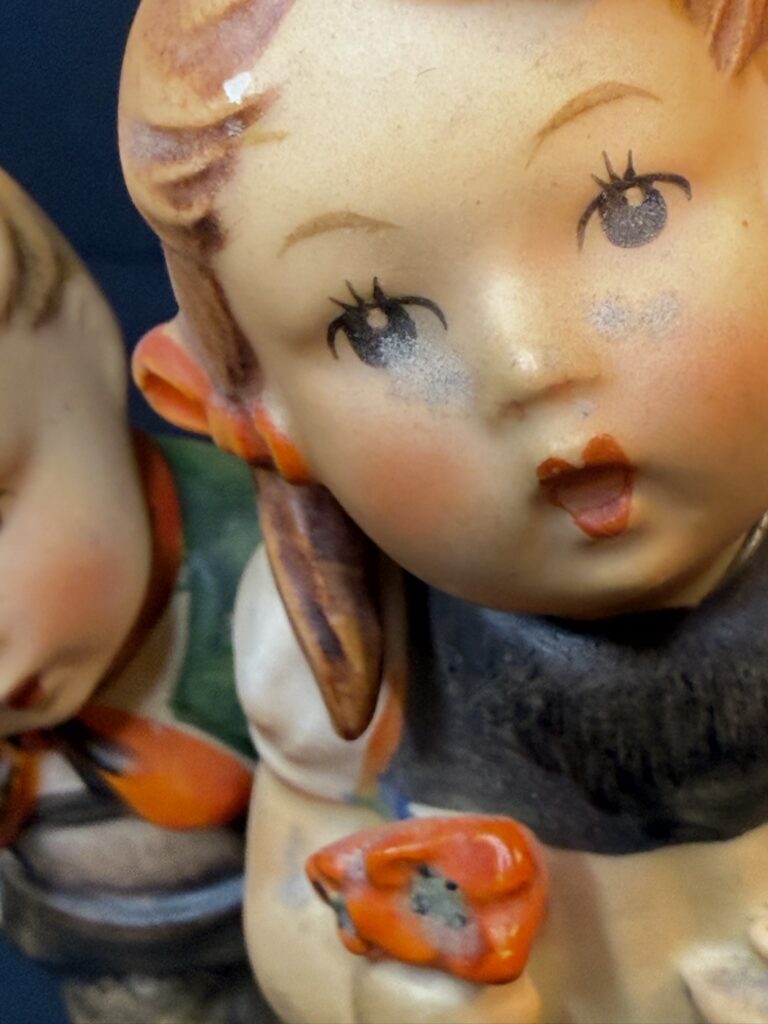
Collectors look for bright, clean color and original paint. Dullness, surface dirt, yellowing, smoke staining, dark spots, and rubbed edges all affect appearance and value.
These issues exist on a sliding scale. Some mild paint rub is expected on older pieces, but noticeable color loss or staining changes the overall impression of the figurine and reduces interest.
Missing Accessories
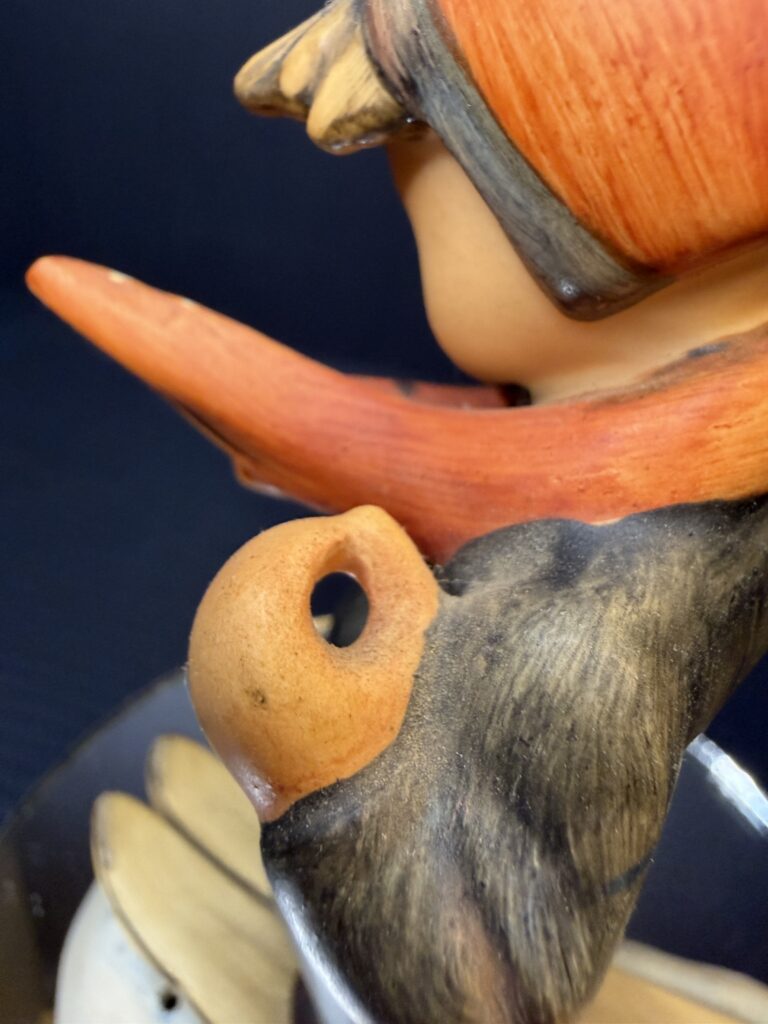
Missing accessories have a major impact on value, even when the rest of the figurine is excellent. Completeness is important to collectors, and many pieces cannot be considered collector quality without their original details.
This is one of the reasons I rarely provide values strictly from a list. When I do, it is always with the understanding that the quoted price assumes perfect condition. Perfect means bright color, clean surfaces, intact details, and no dullness, dirt, dark spots, discoloration, paint wear, crazing, cracks, or chips. If a figurine arrives in a different condition than described, the final price reflects that difference.
How to Evaluate Your Hummel Figurines Before Selling or Consigning
Use these steps to assess your pieces clearly and accurately.
- Use bright and direct lighting: Good lighting reveals texture changes, imperfections, and inconsistencies.
- Run your fingertip along all edges: Chips are often felt before they are seen.
- Check delicate areas closely: Examine braids, bows, flowers, fingers, wings, animal ears, and any protruding or fragile detail.
- Inspect the base carefully: Cracks often start here and move upward.
- Look for changes in sheen: A mismatch in gloss or texture may indicate a repair.
- Confirm that all accessories are present: Poles, flags, and attachments are essential.
- Photograph the figurine clearly: Use bright lighting and a high zoom to reveal minute details that are not always visible to the naked eye. Include front, back, both sides, the base, the trademark, and any noticeable flaw.
Imperfect Hummels can still be meaningful in other ways. My wife gives the broken or damaged ones to our grandkids as “practice Hummels,” and they love them. They display them, play with them, and enjoy them without anyone worrying about a chip or a crack.
Finding some of these imperfections in your collection does not mean your Hummels have no value. It simply means that as a reseller, I do not buy them. Learning how to separate these pieces from the rest of your collection ahead of time saves on shipping costs and prevents misunderstandings for both of us.
If you have questions about a particular figurine, feel free to send me an email or give me a call. I am here to help.
Sincerely,
Jason
Jason Weston specializes in buying Hummels in bulk from families, estates, and long-time collectors. He reviews pieces with an experienced eye for condition, demand, and today’s market standards. Jason is known for honest evaluations, fast communication, and a straightforward process that makes selling a collection easy.